



Opening Doors Through Inclusion
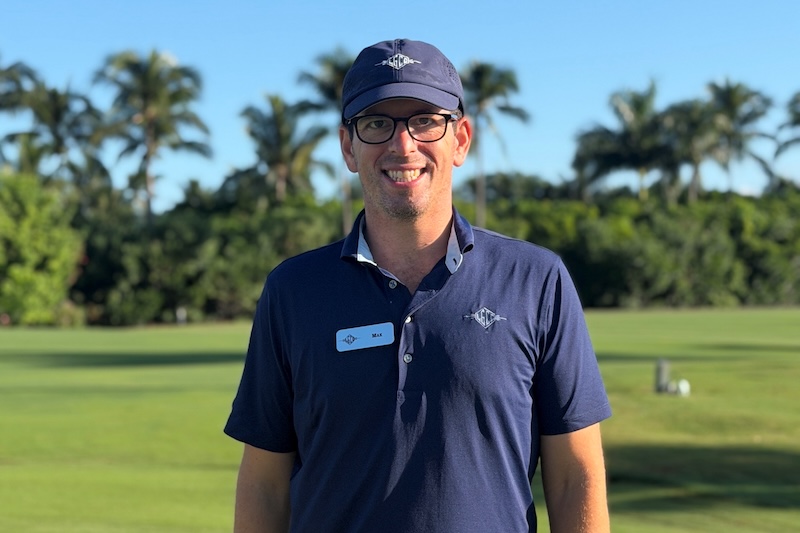
Former UD student Max Orland is using his story to encourage more inclusive campuses and workplaces
When Max Orland graduated from high school in 2006, he faced a choice.
He could enroll in a life skills program near his home in Westport, Connecticut, continue living with his parents, take classes exclusively with other students with disabilities and accept a job someone else chose for him.
Instead, Orland wanted what many high school graduates take for granted: a traditional college experience. He wanted to live independently, take college courses alongside his peers and immerse himself in campus life, especially athletics.
At the time, very few universities offered meaningful opportunities for students with intellectual disabilities. Through connections at the University of Delaware’s College of Education and Human Development, Orland, who has speech and language challenges, charted his own path. As a continuing education student, he spent four years at UD, earning 60 credits and a certificate in sport management in 2010.
Today, after more than 15 years working in the sports and hospitality industry, Orland shares his story to encourage more inclusive education and workplaces.
“Being an advocate for inclusive education and creating welcoming workplaces for individuals with disabilities is about much more than myself,” Orland said. “It’s about sharing the life experiences I’ve been through and helping others gain a greater understanding and perspective.”
Finding his place at UD
Orland enrolled in sport management courses in UD’s Alfred Lerner College of Business and Economics, but he wanted to be involved beyond the classroom.
Beginning his first year, he served as manager for the Blue Hens men’s basketball and baseball teams. He prepared locker rooms, managed equipment, helped with practices and games and quickly became an indispensable part of the teams.
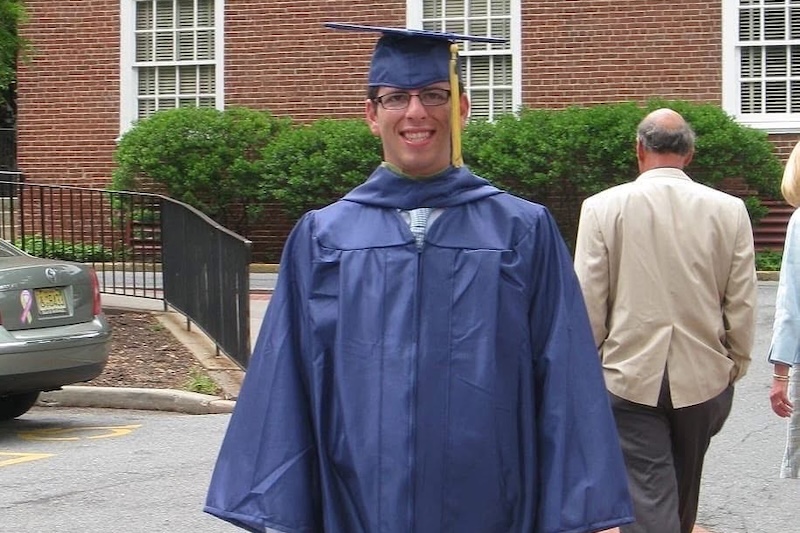
Jim Sherman, then head coach of the baseball team, called Orland “the best team manager we ever had.” The program later named its Rookie of the Year Award in his honor.
Matt Robinson, a longtime sport management faculty member who taught several of Orland’s classes, remembers his determination.
“Max has great work ethic and innate perseverance,” Robinson said. “He showed that if you believe in yourself and work hard enough, you can create opportunities for yourself. Max didn’t view his disability as a barrier. His attitude was, ‘I’m going to make the best of this situation and chase my dreams,’ and that’s a great lesson for anybody.”
Michael Gamel-McCormick, who directed UD’s Center for Disabilities Studies during Orland’s time on campus, said Orland helped challenge assumptions about who belongs in higher education.
“There’s still an attitude that a person with an intellectual disability can’t understand or succeed in university classes, but we have tens of thousands of examples showing that’s simply not true,” Gamel-McCormick said. “In many ways, Max was a barrier breaker who helped establish a path for many others.”

A path for future students
When Orland attended UD, there was no formal program supporting students with intellectual disabilities.
Today, the University offers the Career and Life Studies Certificate (CLSC) program, a two- or four-year certificate program that launched in 2011 and provides students with an inclusive college experience while preparing them for competitive employment.
Students take undergraduate courses, live in residence halls, join student organizations, complete internships and participate in campus life alongside their peers. The program combines academic coursework with career preparation through job shadowing, internships and work-based learning tailored to each student’s interests.
Jay Sellers, manager of the CLSC program, said college is about much more than academics.
“College is a place where people discover who they are,” he said. “It’s where students find community, explore new interests, learn from successes and setbacks and begin building an independent identity they carry into adulthood.”
For Sellers, inclusion benefits everyone.
“Including people with intellectual disabilities reflects the communities we live in,” he said. “People with disabilities have the same goals and dreams as everyone else. Creating more inclusive campuses and workplaces gives more people the opportunity to succeed, while also bringing new perspectives that make those communities stronger.”
Building a career
The teamwork and relationships Orland developed at UD became the foundation for his career.
Now based in South Florida, he works in golf operations at La Gorce Country Club in Miami Beach while also serving as a team attendant for the Miami Heat. Over the years, he has worked for premier golf clubs, and his experience also includes operational roles with the Boston Red Sox, New York Mets, Philadelphia Phillies and the U.S. Open.
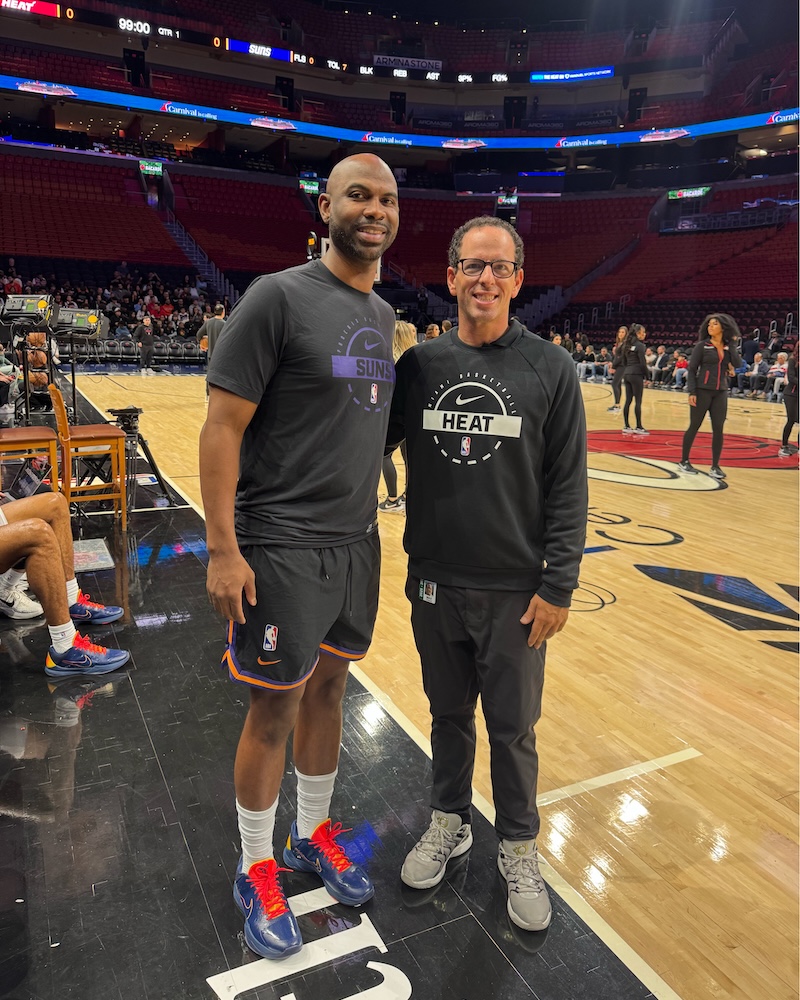
“Every opportunity I’ve had in my career has involved working as part of a team,” Orland said. “I’ve met so many people across sports organizations, and being around people is something I always enjoy. Tournaments, game days and events are my favorite part of the job because I love the action, the preparation and being part of memorable moments.”
Along the way, Orland has become a sought-after speaker on disability inclusion, presenting at national conferences and industry events. Outside of work, has served on the junior board of INCLUDEnyc and volunteers with Special Olympics.
“I believe there’s always a need for more educators, advocates and leaders willing to create opportunities and open doors for others,” Orland said. “If I can bring hope to others, speak to students, professionals and companies, or help people see things from a different perspective, then I know I’m making a difference.”
Among those reconnecting with Orland in recent years is Meghan McLean, a former Blue Hens women’s basketball player who is now president and CEO of Special Olympics Florida. The two first met as students at UD and crossed paths again through Orland’s volunteer work.
“I think it’s incredibly important to look beyond the disability and make sure we have all different kinds of people in our universities, on our campuses and in our workforce,” McLean said. “We’re better when we have diversity of thought and diversity of experience, and that includes people with intellectual disabilities.”
Looking back, Orland hopes his own journey demonstrates what becomes possible when students are given an opportunity.
“I never let my speech and language challenges define who I am or limit what I can achieve,” Orland said. “If my story encourages even one person to believe in themselves, overcome adversity and keep moving forward, then sharing it has been worthwhile.”

Photos courtesy of Max Orland.