



Cultures of Healing
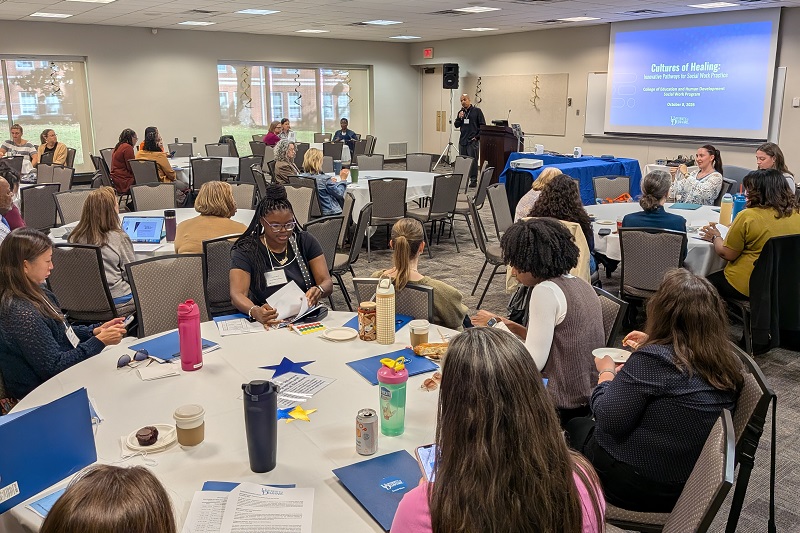
University of Delaware addresses the critical need for social workers through conference focused on innovative pathways for social work practice
With specialized training in human development, human services and social systems, social workers are uniquely positioned to support communities in times of crisis or challenging life changes. With its master of social work program (MSW) and community outreach, the University of Delaware College of Education and Human Development (CEHD) prepares skilled professionals who can help individuals and communities heal emotionally and socially from these challenging life events.
In October 2026, the college hosted a conference for social workers and other treatment providers, educators, researchers and students from Delaware, New York, New Jersey and the Washington Metropolitan region. Titled “Cultures of Healing: Innovative Pathways for Social Work Practice,” the conference explored how cultural, developmental and systemic realities shape pathways to healing. Through expert focal sessions, an interactive panel and guided reflection, the event moved beyond “one-size-fits-all” interventions, diving into culturally responsive strategies for clients with complex, intersecting identities—from Indigenous child welfare and forced displacement to neurodivergence, music-based strategies and tech governance.
“The inspiration for this conference was the desire to provide practitioners, educators, students and community partners with tools for how social workers can help create the conditions in which people, families and communities can develop, heal, participate and thrive,” said Raphael Travis, CEHD professor and director of the MSW program, who studies how the creative arts foster well-being. “The ultimate goal was to explore emerging evidence and social work perspectives that describe the impacts of culture, history, relationships, environments, opportunities and systems on healing.”
The conference also featured a keynote presentation from Earl Smith, professor in UD’s Department of Women and Gender Studies and senior research scientist in the Center for the Study and Prevention of Gender-Based Violence. Drawing from his research in social stratification, criminal justice and race, he spoke about “Pathways to Healing: Black Men and Intimate Partner Violence.”
“The conference was an excellent learning opportunity,” said Debra O’Neal, founder and CEO of ELH Services, LLC in Delaware. “Each speaker presented a unique perspective on several topics including intimate partner violence prevention, belonging and well-being as it related to migration, indigenous people and people with disabilities, as well as technologies’ influence on case decision-making. Dr. Earl Smith’s keynote presentation was really powerful.”
To learn more about the MSW program, visit the program website. To learn more about CEHD research in the social determinants of health, visit its research page.
Social workers, educators, researchers and students from Delaware, New York, New Jersey and the Washington Metropolitan region attended October’s conference.
Header image caption: Raphael Travis, CEHD professor and director of the MSW program, introduces the program for “Cultures of Healing: Innovative Pathways for Social Work Practice” in October 2026.
Article by Jessica Henderson. Photos by Shelly Silva.