



Domestic Violence Systems Tested
UD research explores how domestic violence systems adapted during COVID-19 disruptions
Domestic violence services faced unprecedented challenges during the COVID-19 pandemic, when stay-at-home orders increased isolation for survivors and disrupted the systems designed to support them. New research from the University of Delaware examined how domestic violence response networks, or coordinated community response (CCR) systems across 25 states and territories, adapted during the crisis.
“Abusive partners played on victims’ legitimate fears of the virus by further restricting where victims could go or who they could contact,” said Ruth Fleury-Steiner, associate professor in UD’s College of Education and Human Development. “Reaching out for help was even harder for victims when they could not go out even long enough to make a phone call.

Compounding these challenges, the domestic violence workforce was not classified as “essential.”
“Stay-at-home orders really hindered their ability to show up for survivors and do their work, even though they perform essential services like operating shelters,” said Lauren Camphausen, assistant director of the master of public health (MPH) program in UD’s College of Health Sciences.
Jennifer Horney, founding chair of UD’s Epidemiology Department, and Camphausen examined how CCR systems serving victims of domestic violence adapted during the height of the pandemic in collaboration with Fleury-Steiner and colleagues. Through interviews with domestic violence coalition leaders, the researchers explored how agencies, law enforcement, courts and healthcare providers responded to unprecedented disruptions in service delivery.
The interdisciplinary study was recently published in the journal Violence Against Women. Co-authors include: Susan Miller, professor of sociology and criminal justice in UD’s College of Arts and Sciences; Sarah Wells, an alum of the MPH in epidemiology program; and Zakariah Robinson, a current epidemiology doctoral student.
A closer look at the pandemic’s impact on CCRs
The UD study, funded by the National Science Foundation, shows that law enforcement and the legal system broke down during the pandemic. Participants reported that police officers were hesitant at times to respond to 911 calls. And, while the number of domestic violence reports increased during the pandemic’s first few months, the number of arrests did not.
CCRs, which coordinate services among domestic violence agencies, law enforcement, courts and health providers, were forced to rapidly adapt. Domestic violence agencies quickly shifted services to hotels and motels, while partnerships with food banks and virtual court systems helped address survivors’ changing needs.
“The process of gathering information was thoughtful and thorough and allowed domestic violence agencies to share the challenges they faced during the pandemic,” said Sue Ryan, executive director of the Delaware Coalition Against Domestic Violence. “It was also an opportunity to note strengths and resilience, including the importance of coordinated community responses.”

Lessons learned
Delaware’s system is unique. Unlike most CCRs, which operate at the regional level, Delaware operates at the state level, bringing together state partners to coordinate services. That created its own challenges.
“What works for New Castle County doesn’t necessarily work for more rural Sussex County, where access to reliable technology proved an issue,” Camphausen said. “The services and solutions to fill gaps look totally different.”
For Horney, this research is at the intersection of disaster science and disaster epidemiology.
“FEMA has spent the past two decades building a whole community model where all organizations come together because the only way you can prepare and recover is if everyone plays a role,” Horney said. “It’s very similar to the CCR model, and raises the question of whether we can improve disaster preparedness and response by looking at this long-standing model in another space.”
Fleury-Steiner called for federal investment in virtual services and emphasized the importance of partnerships between researchers and practitioners to ensure services meet community needs.
“Innovations like hotline chat functions and translation software could increase accessibility to many types of services and be beneficial to other groups during emergencies and disasters in the future,” she said. “Systems must ensure that evidence-based best practices are adaptable to virtual environments so the services that keep victims safe can continue to be provided.”

A bright spot
Despite widespread disruption during the pandemic, researchers also identified resilience within the CCR system.
“In public health, we say, ‘Don’t exchange business cards in an emergency,’” Horney said. “The CCRs’ long-term and well-established relationships, combined with their flexibility, helped them thrive.”
Camphausen echoed, “This is a system known to be under-resourced with high amounts of burnout and turnover, which was absolutely exacerbated to unprecedented levels during COVID, and through it all, they dug into that ongoing spirit of perseverance and ingenuity and pushed forward to meet survivors’ needs.”
Going forward, Camphausen hopes domestic violence agencies can use their research findings to advocate for policy changes.
“This study provides some real legitimacy and strong insight into that – in good times, a lack of investment and recognition in vital systems makes them all the more vulnerable when we’re going through disasters and emergencies,” Camphausen said.
Support for community members
For members of the Delaware or UD community in need, help is available. The New Castle County Domestic Violence Hotline is 302-762-6110.
Victim Services through the Office of Student Advocacy and Support is also here to confidentially support UD students impacted by sexual violence, dating and domestic violence and/or stalking. UD students can also receive immediate, confidential support through the TimelyCare app.
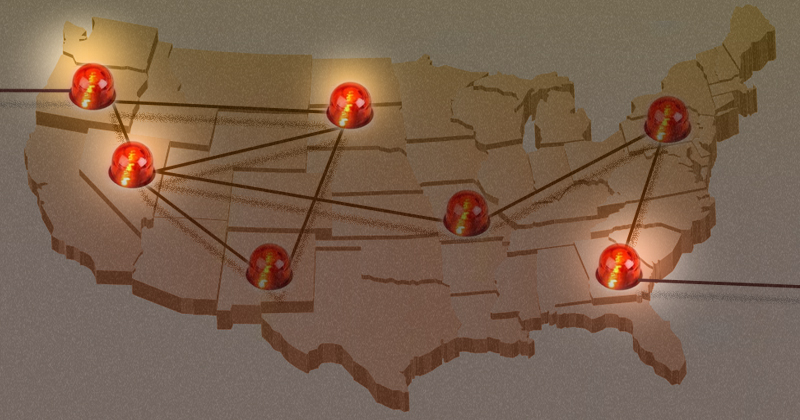
Header image caption: Researchers at UD studied how domestic violence response networks adapted during the COVID-19 pandemic in 25 states and territories.
Photo illustration by Jeffrey C. Chase. Photos by Ashley Barnas Larrimore and Kathy F. Atkinson.