



Research Spotlight: Jin Yao Kwan
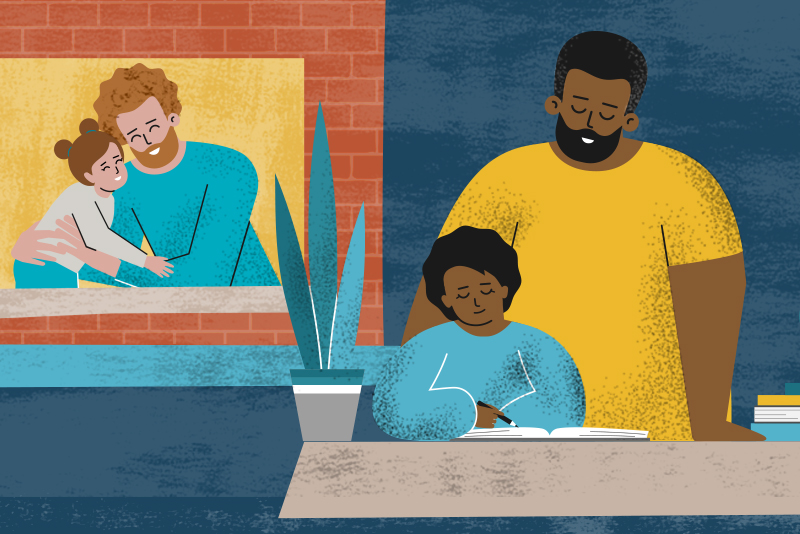
Assistant Professor Jin Yao Kwan shares research and insight on how co-parenting reduces overall parental stress
As a child and adolescent development researcher with a social work background, University of Delaware Assistant Professor Jin Yao Kwan understands how true the familiar proverb “it takes a village to raise a child” is for parents. With Father’s Day around the corner, Kwan shares findings from his research and practice that show just how valuable that village is for reducing stress.
In a study published in Families in Society with Jennifer L. Bellamy of Washington University in St. Louis and other colleagues, Kwan and the research team found that both mothers’ and fathers’ co-parenting directly reduced their own parenting stress. The study grew from Kwan’s collaborative evaluation of the Nurturing Dads and Partners (NDAP) program in Colorado, which integrated a home visitation program called “Dads Matter-HV.” The program reduces barriers to father engagement by improving the quality of the father-mother co-parenting relationship and supporting fathers in their roles as parents of young children.
“We looked at 174 pairs of co-parents, most of whom were no longer living together, asking them questions about how they felt about their own parenting and that of their co-parent, as they worked together to raise their child,” said Kwan, who teaches research methods and program evaluation in the College of Education and Human Development’s (CEHD) Department of Human Development and Family Sciences (HDFS). “As they became more involved as parents, they more positively evaluated each other’s co-parenting and experienced lower levels of parenting stress overall.”
The findings show just how important co-parenting can be — not only for the health and development of the child, but also for the health of the parents and the overall family unit. The study also challenges traditional, gender-based divisions of labor in parenting.
“The conventional notion of parenting is that moms, on average, are still more involved than dads, and that’s still true,” Kwan said. “But, if we persist in that notion, then we may create blind spots for ourselves and miss opportunities to get fathers more involved.”
But how do we help fathers become more involved? Drawing from his time working with the NDAP program, his evaluation of the Dads Matter-HV program and his own research on single-parent families, Kwan offers several important takeaways.
“In the context of divorce or separation, there can be a lot of acrimony,” Kwan said. “But an important first step — no matter how difficult or challenging those transitions may be — is to recognize that the well-being and development of the child must be central.”
That recognition can help mothers and fathers work through the interpersonal challenges that can serve as barriers to their own co-parenting.
“Many states, including Delaware, have divorce education programs where the expectation is not to fall back into union with one another, but to recognize that if you have kids involved, you’ll need to find a way to do this together,” Kwan said. “In Colorado, one of the fathers in our study said he couldn’t stand the sight of his former partner at the beginning, but by the end, his relationship with her changed when he began to reflect on his own parenting and see how it was more valuable to work with his co-parent, rather than against her.”
For fathers navigating this transition — and for fathers across all types of family units — Kwan also recommends connecting with other fathers, emphasizing the value of peer support.
“Fathers benefit when they get to talk about and reflect on their own parenting with other fathers,” Kwan said. “Your identity as a father can be shaped by feeling seen as a father by other fathers. So often, people father the way they were fathered, but maybe they want to change that. When connecting with other fathers, we can seek advice and support or even ask, ‘Is this the relationship that we want to have with our own children?’”
Programs like these and others offered by social work agencies, hospitals and community organizations can help fathers connect with parents and support their parenting and co-parenting skills. With a dedication to open access materials and an engaging teaching approach, Kwan teaches students in HDFS to conduct the rigorous, but critical work of evaluating these kinds of programs.
And, for families that may have suffered the loss of a father or cannot engage in a relationship with them, Kwan returns again to the parenting village.
“The research that we’ve done on these programs speaks to the importance of the co-parent, but that person doesn’t necessarily have to be the biological parent of the child,” Kwan noted. “Familial and social support can come from extended family members such as grandparents, or it can come from other trusted adults as well — friends, neighbors or romantic partners.”
“Parenting is really difficult, and you don’t always have to do it by yourself,” Kwan said. “It really does take a village, as folks say.”
To learn more about CEHD research in early childhood, human development and family policy and services, visit its research webpage.
Article by Jessica Henderson. Illustration by Jeffrey C. Chase. Photo by Maria Errico.
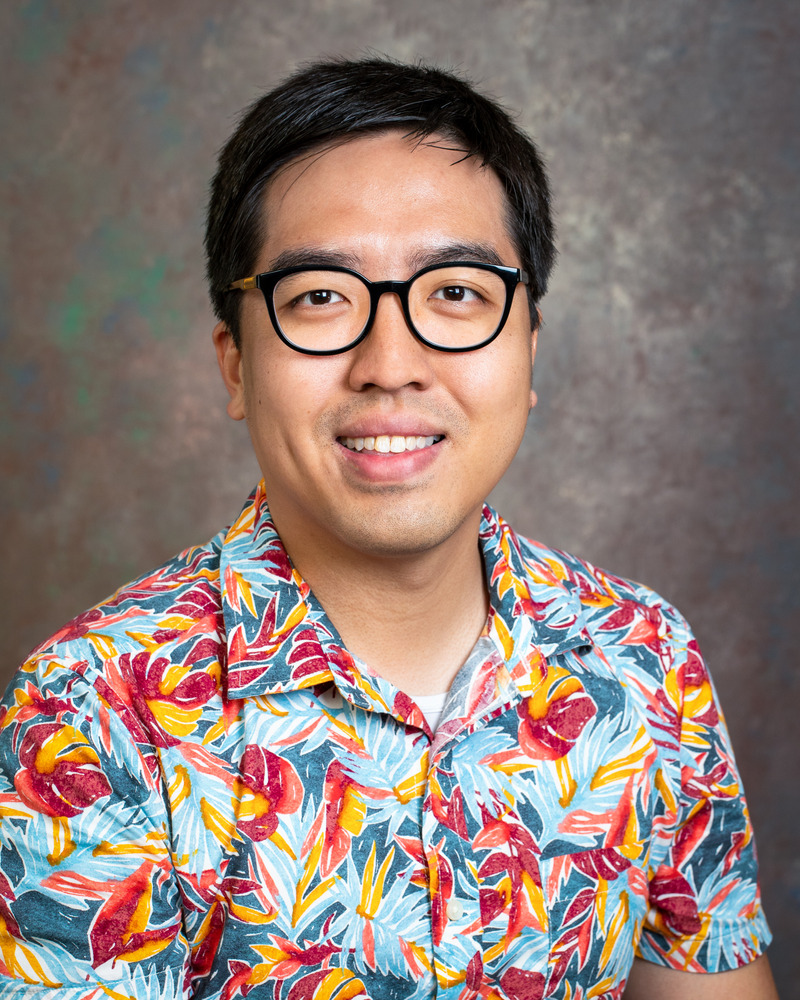
About Jin Yao Kwan
Jin Yao Kwan is an assistant professor in CEHD’s Department of Human Development and Family Sciences. He is also Research Fellow with The Majurity Trust, a philanthropic organization in Singapore. Kwan’s research focuses on the development of adolescents, youth and young adults in underserved communities. Specifically, he explores how families and communities use institutional supports and examines structural factors and contextual processes perpetuating poverty and inequality.
This research complements the work of CEHD faculty studying family policy and services, including Ann M. Aviles, Sarah Curtiss, Steven M. Eidelman (emeritus), Ruth E. Fleury-Steiner, Myae Han, Jason Hustedt, Eric K. Layland, Abram J. Lyons, Kate Riera, Barbara Settles (emeritus), Bahira Sherif Trask (emeritus) and Raphael Travis Jr.