



Influential Interactions

With two new grants, Assistant Professor Jarett Haley will explore student interactions with career services staff in higher education
Drawing from his experience as a college student affairs educator, University of Delaware Assistant Professor Jarett Haley has focused his research program on understanding students’ experiences in student affairs and other higher education contexts. With two new grants from the National Association of Student Personnel Administrators and the American College Personnel Association, Haley will now examine undergraduate Black men’s interactions with college career services staff.
“College career services offices are often the only institutionally sponsored resources dedicated to supporting college students’ career development,” said Haley, who studies student experiences in UD’s College of Education and Human Development (CEHD). “However, despite the fact that most students identify improved career opportunities as their primary motivation for enrolling and remaining in higher education, racially minoritized students have generally been found to underuse college career services offices. I’m curious about the reasons for this, since the field of career services has become increasingly aware of the need to tailor services to this group’s distinct career development needs.”
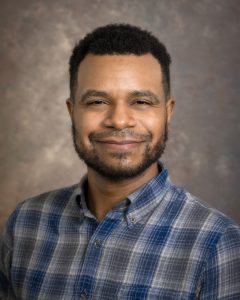
The new project will explore student and staff interactions to understand how they may impact the students’ use of the center’s services. It will build on Haley’s previous research, which found that Black men can experience race and gender-based discrimination in their interactions with different student affairs staff members and in their experiences in student affairs contexts (like residence life) at historically white institutions.
“In light of my previous research, there is a chance that these students could be having similar experiences in their interactions with career services staff members, which would naturally lead them to not use or value these offices,” Haley said. “Given this potential, I designed this qualitative study to explore the interactions between undergraduate Black men and college career services staff members at historically white institutions in the U.S.”
Haley and Sadé Williams, a Ph.D. in Education student serving as a graduate research assistant, are currently recruiting participants for the study and conducting interviews. The project will continue through December 2026.
The findings from this study have the potential to increase the accessibility of career services for all students, especially undergraduate Black men, and improve their experiences in higher education student affairs broadly.
“Career center staff could use our findings to improve their practice with Black men, and potentially, help address the issue of underutilization of career services among this student population,” Haley said. “Moreover, student affairs staff members in other areas, like residence life or student activities, may find these findings useful, since they may be engaged in similar practices that could be viewed as discriminatory by Black men.”
To learn more about CEHD research in student experiences or educational administration, visit its research webpages.
Article by Jessica Henderson. Photos by Adobe Stock and Kathy F. Atkinson.