



Research Spotlight: Stephanie Smith Budhai

University of Delaware Associate Professor Stephanie Smith Budhai helps K-12 teachers use AI critically, purposefully and joyfully in the classroom
Inspired by her middle school social studies teacher, University of Delaware Associate Professor Stephanie Smith Budhai has always believed that a classroom should be a space where students feel valued and nurtured. As a seasoned educator herself, she has helped teachers create these spaces using technology to help students meet learning outcomes, develop their skills and grow their confidence.
Now, in the years after ChatGPT first burst into schools, Budhai is inspiring overwhelmed teachers to reclaim the classroom as a nurturing environment for all students. Her book, Critical AI in K-12 Classrooms: A Practical Guide for Cultivating Justice and Joy with co-author Marie Heath of Loyola University Maryland, supports teachers and students as they navigate the complicated interactions of AI, education and justice.
“It’s tempting to think about AI as a tool that has all the answers. But it doesn’t have a brain,” said Budhai, who specializes in educational technology in UD’s College of Education and Human Development (CEHD). “It’s a probability machine that recognizes patterns. Instead of allowing students the opportunity to critically think and develop their own original answers, it provides outputs that are often false, replicating the biases, harms and injustices that we already see in society.”
For example, a teacher might turn to an AI tool to provide students feedback or grade an assignment. On one hand, this tool has the potential to save the teacher valuable time and energy, which they could reinvest into their students. On the other hand, the feedback that some students receive may be biased, depending on the students’ demographics and other attributes. This feedback may ultimately make them feel less confident or welcomed in the classroom than others.
“Some AI tools may make a judgment about the quality of a student’s work based on the name that is attached to it,” Budhai explained. “For example, if the student’s name sounds connected to certain cultures, the tool may grade the work more harshly or even deliver the feedback in a different way—using language that is more authoritative, like ‘You should do this,’ instead of, ‘Have you considered doing this?’ in a more collaborative tone.”
More and more, students are turning to AI for core academic tasks like writing topic sentences, conducting research or analyzing literature. But as Budhai points out, bypassing these tasks can erode students’ confidence in their own abilities while giving them a false sense that they can succeed without fundamental skills. The result is not just “de-skilling”—losing the skills they once had learned—but what Budhai calls “never-skilling.”
“Students’ cognitive capacities are being impacted as they offload tasks to AI,” Budhai said. “Memory loss, brain atrophy and lack of critical and creative thinking are of great concern as students increase their use of AI.”
This is not to say that Budhai advocates against AI use in the classroom. She does the opposite. Her goal is to help teachers and students use AI with purpose so that they “first, do no harm.”
“Before a teacher starts to use an AI tool, I always ask, ‘What is the purpose of using this tool? Is it really serving the learning objective, or is it more of a novelty device, or even a shortcut?” Budhai explained.
Most importantly, Budhai wrote this book to support teachers in using AI ethically while bringing joy into the classroom—a combination that sets Critical AI in K-12 Classrooms apart. Uniquely, Budhai and Heath guide teachers in building a critical consciousness around AI using culturally sustaining and abolitionist pedagogies, among others. They also offer personal, professional and instructional actions teachers can take to foster a just learning environment.
Since its release in September 2025, the book’s impact has been far-reaching. Budhai and Heath have traveled the country speaking to K-12 teachers, school leaders and professors from California to New York. Internationally, they were invited by the Abu Dhabi Department of Education and Knowledge to consult on the use of AI in K-12 education. This fall, they will lead a session titled “AI and the Deskilling of Professional Knowledge in Education” at the National Technology Leadership Summit, to be held at the National Education Association in Washington, D.C. in September, and they will speak at Morgan State University’s Higher Education and Student Affairs Talks Series in October. Additionally, they continue to share their insights on prominent education podcasts, including the multi-award-winning Silver Lining for Learning, Harvard EdCast and Trending in Ed.
Research in Emerging Technologies at UD
Budhai’s research and teaching in educational and emerging technologies complement the work of many faculty within CEHD and across UD. For example, UD’s AI Center for Excellence facilitates teams of AI partners within and outside UD to advance multidisciplinary research, collaboratively apply technological solutions to challenges across disciplines and create impactful and beneficial AI projects.
UD’s 2026 Summer AI Conversations also bring together key campus discussions about artificial intelligence across teaching, student learning, research, innovation, workforce development and operations.
To learn more about CEHD research in STEM education, including educational technology, and teacher preparation, visit its research webpage.
Article by Jessica Henderson. Photo by Adobe Stock.
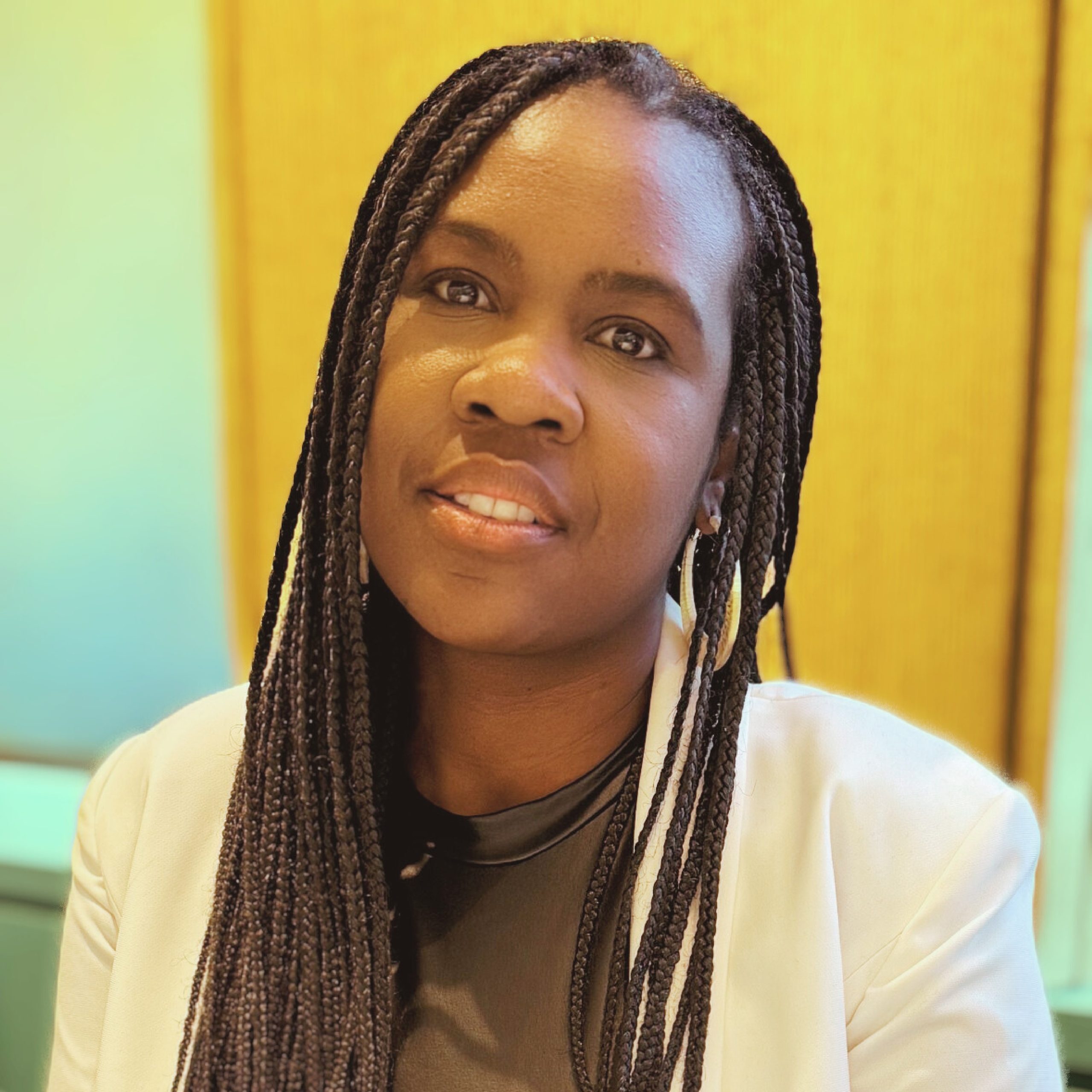
About Stephanie Smith Budhai
Stephanie Smith Budhai is an associate professor in CEHD’s School of Education, specializing in educational technology. Her interdisciplinary research and practice lies at the intersections of technology, equity and civic engagement, across myriad K-16 settings. She has published nine books on teaching and digital technologies, including her most recent publication, Critical AI in K-12 Classrooms: A Practical Guide for Cultivating Justice and Joy. Among other professional appointments, she serves as the Associate Chair of the Information Technology Council for the Society for Information Technology and Teacher Education.
This research complements the work of CEHD faculty studying educational technology and digital literacy, including Fred Hofstetter, Rachel Karchmer-Klein and Teomara Rutherford.