



Fractions in First Grade

With a new $1.2 million federal grant, Professor Nancy C. Jordan aims to foster early fractions learning in first and second grade
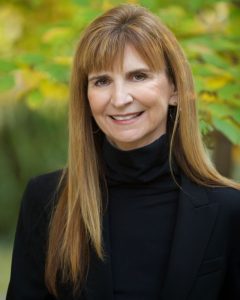
Nancy C. Jordan, Dean Family Endowed Chair of Education and professor at the University of Delaware, has dedicated her career to helping young students develop early number sense and fractions understanding through research grounded in the science of how children learn. Now, with a new $1.2 million grant from the National Science Foundation, Jordan and her research team will continue to help first and second graders build a strong foundation for fractions learning.
“I have been studying children’s mathematical learning and learning difficulties for a long time, and fractions are notoriously difficult for many students,” said Jordan, who studies the learning sciences in UD’s College of Education and Human Development (CEHD). “Fractions are a key factor contributing to math difficulties, particularly in algebra, which is crucial for success in the STEM workforce. Yet, many students leave elementary school with a tenuous understanding of fractions, despite years of formal fraction instruction.”
The new project will help schools integrate fractions more effectively into the primary mathematics curricula, before formal fraction instruction occurs. It will build on Jordan’s previous research, which found that children’s informal fractions understanding begins in first grade. During this period, children begin to break down whole numbers into parts, but struggle with the symbolic representation of fractions. Jordan found that a series of playful activities—designed to foster early fractions understanding—can help students connect their informal fraction knowledge to fraction symbols.
“By examining how children already conceptualize fractions—for example, recognizing that one-half represents two equal parts of a whole—educators can help them bridge their informal knowledge with formal representations, such as the fraction symbol ½,” Jordan said. “Due to the prevalence of technology, children may have limited exposure to traditional representations like clock faces (understanding half or quarter past 3:00), money (understanding that four quarters equal a dollar) and rulers (measuring half an inch). For this reason, it’s essential to help identify ways that teachers can reinforce these foundational concepts.”
Jordan and her team have begun a systematic study of the first and second grade mathematics classroom, guided by the following research questions:
- How is fraction-related information included in first- and second-grade classrooms?
- What role do early school experiences play in shaping children’s understanding of fractions?
- How does early fraction knowledge develop between first and second grades, and how is this progression connected to whole number development?
- Does targeted instruction in key fraction concepts in first and second grades support this development?
The research team—which includes CEHD Assistant Professor Ethan McCormick, Nora Newcombe of Temple University and Alexandria Viegut at the University of Wisconsin-Eau Claire—is currently analyzing fractions-related information in first-grade textbooks and developing their assessment and training activities. The project will continue through August 2028.

“Your efforts to bridge the gap between whole number instruction in the earliest grades and the development of fraction knowledge sets a remarkable standard for innovation in education research,” said Delaware U.S. Representative Sarah McBride in an October 2025 letter to Jordan and her team. “By deepening our understanding of how young learners build mathematical cognition and by creating new pathways to support them, you are opening doors to greater confidence and success for future generations.”
In addition to fostering early fractions learning, the project will have a broad impact on early STEM learning and education by providing training opportunities for undergraduates, doctoral students and post-doctoral researchers.
To learn more about CEHD research in the learning sciences or STEM education, visit its research webpages.
Article by Jessica Henderson. Photos by: Adobe Stock and courtesy of Nancy C. Jordan and Ethan McCormick.